
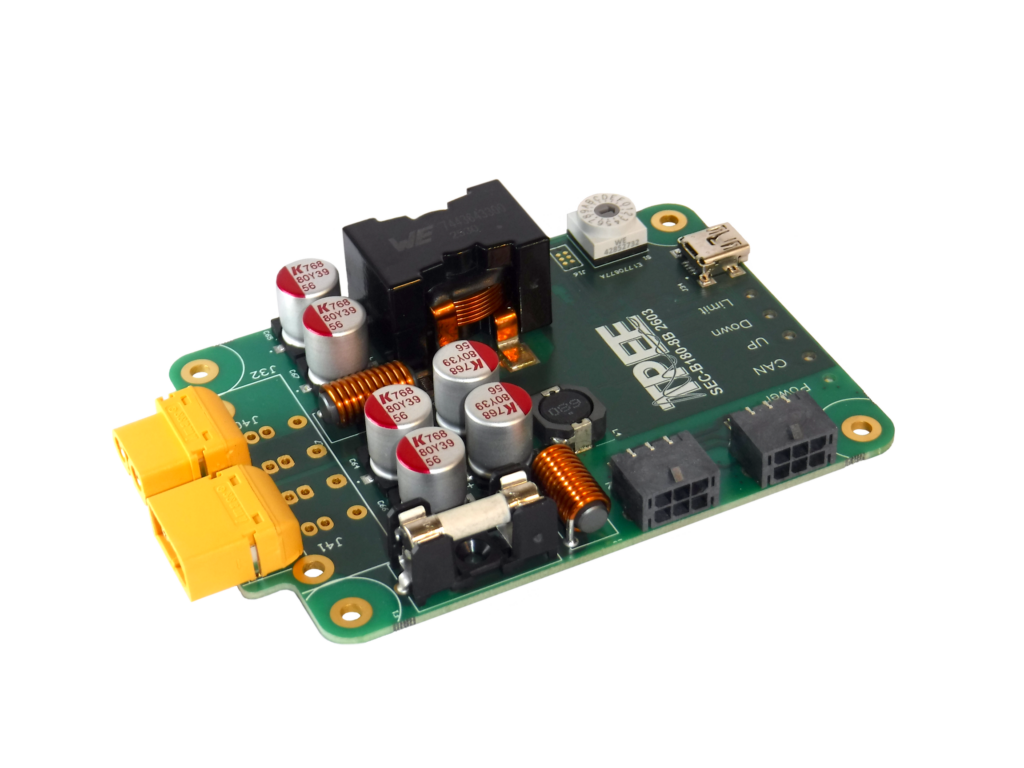
SEC-B80-8B-XT MPPT

SEC-B80-8B-XT MPPT

80V, 8A smart Maximum Power Point tracking DC/DC Converter, with XT60 connectors.

Availability: In stock

SEC-B80-8B is the improved version of the original open-source ‘Reboost’ Maximum Power Point Tracker. The design features a higher efficiency, lower weight, and improved EMI filtering; all while significantly improving tracking performance and stability. This makes this product ideal for high performance applications, where weight and reliability are of upmost importance. The -XT variant comes with two XT60 power connectors for an even lighter weight, and easier integration into existing ecosystems.
The SEC-B80-8B can handle high-side voltages up to 80V and low side current up to 8A. The device can be configured as either a boost converter or a Buck converter.

The SEC-B80-8B is also available in different versions:

  • SEC-B80-8B with standard terminal block connector
  • SEC-B80-8B-XT features XT60 connectors for lower weight


Weight 0.4 kg
Output Voltage

15V to 80V

Absolute Maximum Voltage

100V

Input Voltage Range

6V to 0.97*Vout

Input Current Range

0A to 8A

CAN bus supply voltage

6V to 48V

CAN bus speed

125kbps to 1Mbps

CAN isolation rating

1kV

Weight

110 Gram

Heatsink Temperature Range

0°C to 80°C

Connector

IP, Terminal Block, XT60

Current Rating

10A, 8A

Recourses

FAQ

For items that are in stock, the delivery time is within 2 weeks. The typical lead time for products that are out of stock is around fourteen weeks. 

No, there is no minimum order quantity.

TPEE may offer discounts based on order size or as part of sponsorship deals, subject to the level of support required.

The SEC-B175-7A is designed for high-efficiency power conversion and uses Gallium Nitride transistors. It has specific voltage and current capabilities detailed in the datasheet.

TPEE uses a solar panel simulator and DC-load testing setup, as well as additional tests for extreme conditions such as high temperatures and voltage/current protection.

Yes, the output side can be paralleled. However, each solar string or panel should be connected to its own MPPT to avoid issues.

TPEE uses a combination of real-world testing data and digital modeling to estimate specifications, which are continually refined for accuracy.

Yes, the software is open-source, allowing users to adjust the MPPT algorithm or other settings. However, modifications are at the user’s risk and require specific tools for reprogramming.

Available measurements include input/output voltage, current, and temperature of certain components like MOSFETs.

The MPPT’s software supports various modes through CAN-bus. The devices can be enabled and disabled. Furthermore, telemetry data is available through the CAN bus interface.

Yes, TPEE’s MPPTs are tested for high temperatures. While cooling is often adequate with airflow, additional cooling measures can be implemented as needed.

Yes, TPEE is open to meetings to discuss technical questions, support, and potential sponsorships.